How to choose a coffee grinder
Updated:
For specialty coffee, choose a burr grinder, not a blade one - grind uniformity affects taste more than any other piece of equipment. Decent manual burr grinders start at around 200-350 zł and up to 500 zł they beat electric ones on grind quality; respectable electric grinders start at around 600-700 zł. Below are proven models from 200 to 3000 zł and the criteria for choosing.
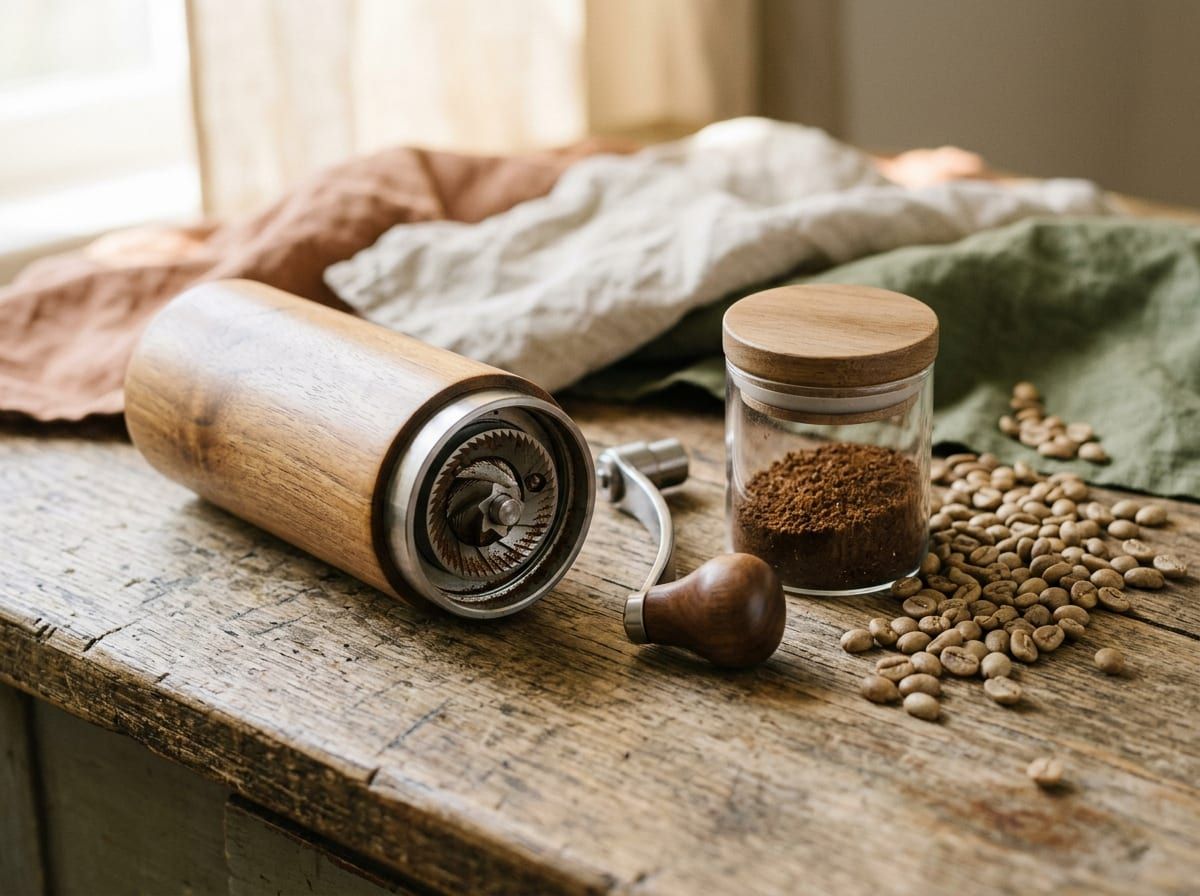
Why the grinder decides the taste
Water rinses flavor from the surface of the coffee particles, so the size of those particles steers the whole extraction. The problem is that no grinder grinds perfectly evenly: alongside the target particles it produces dust (fines) and coarse chunks (boulders). Fines give up their flavor instantly and bring bitterness, while coarse chunks do not manage to extract and drag the brew toward sourness. The narrower the particle size distribution, the cleaner and sweeter the cup - and it is precisely this uniformity you pay for when buying a grinder. Freshness does the rest: coffee loses most of its volatile aromas within a dozen or so minutes of grinding, which is why any grinder at home beats grinding in bulk at the shop.
Burr or blade grinder - which one for specialty?
Blade grinders (propeller-style, 50-100 zł) chop the bean with a spinning blade into random pieces - from dust to bean halves - and have no adjustment at all. They are not suitable for specialty coffee, no matter how expensive the coffee you pour into them. Burr grinders crush the bean between two cutting elements set at a fixed gap, so the particle size is controlled and repeatable. Burrs can be conical (most manual and cheaper electric grinders) or flat (more expensive electric ones, with an even more uniform grind for pour-over). The material matters: steel cuts sharply and is easy to clean, while ceramic in the cheapest models more often means axle play and an uneven grind.
Manual or electric?
For the same money a manual grinder will always grind more evenly than an electric one - you are not paying for a motor, housing and electronics, only for the burrs and bearings. Manual grinders also win on quietness, size and portability. Electric grinders buy time and convenience: a pour-over dose in 10-15 seconds instead of 40-60 seconds of cranking, which makes a difference at 3-4 coffees a day. A practical rule: one or two coffees a day - manual; a house full of coffee lovers or espresso every day - electric.
Which grinder to buy? Models by budget
| Model | Type | Price | For whom |
|---|---|---|---|
| Timemore C2 | manual, conical steel | 200-250 zł | first grinder for pour-over |
| Timemore C3 / C3 ESP | manual, conical steel | 250-400 zł | pour-over + occasional espresso (ESP) |
| 1Zpresso Q Air | manual, conical steel | around 350 zł | travel, small budget, high precision |
| 1Zpresso J-Max | manual, stepless micro-adjustment | 700-900 zł | espresso and pour-over with one grinder |
| Comandante C40 MK4 | manual, conical steel | 1100-1300 zł | a benchmark, a buy for a decade |
| Wilfa Svart Aroma | electric, conical | 600-700 zł | cheapest sensible electric for pour-over |
| Baratza Encore | electric, conical | 800-900 zł | a classic with cheap spare parts |
| Fellow Ode Gen 2 | electric, flat 64 mm | 1600-1800 zł | pour-over with no compromises |
| DF64 / Eureka Mignon Specialita | electric, flat | 1500-2400 zł | serious home espresso |
What to look for in the specs
- Burrs: steel; the larger the diameter, the faster and more even the grind (38-40 mm in manual grinders is standard, 48 mm and up is a class higher).
- Adjustment: the number and resolution of clicks. For pour-over, steps of 20-30 microns are enough; espresso needs finer ones.
- Axle bearings: double ball bearings eliminate axle wobble - the main reason for an uneven grind in cheap models.
- Retention: how much ground coffee stays inside. Good designs keep it below 0.2 g - yesterday's leftovers do not spoil today's cup.
- Servicing: the availability of parts (burrs, bearings) extends the grinder's life by years - a strong point for Baratza and Comandante.
Calibration: where to start
Every grinder has a different scale, so count clicks from zero (burrs closed all the way). A starting point for the Comandante C40 is around 22-26 clicks for V60 and 30+ for French Press; in the Timemore C2 - around 18-22 for pour-over. Then adjust by taste: coffee that is bitter and astringent - go 1-2 clicks coarser; sour and hollow - finer. Change one parameter at a time and record the settings for each coffee; you will find the details in the recipes for each brewing method.
Also reckon with the differences between beans. Light-roasted coffees from high-altitude farms are harder and denser, so the same setting gives an effectively coarser grind with them - go 1-2 clicks finer when you switch from a dark roast to a light one. After changing coffee, treat the first brew as a calibration one, and note the setting on the bag in pencil or in your phone. This habit costs 10 seconds and saves whole weeks of guessing.
Single dosing and static in practice
The home standard for working with a grinder is single dosing: you weigh a dose of beans before grinding (e.g. 15.0 g) instead of keeping a supply in the hopper, where the coffee airs out and goes rancid. All manual grinders work this way by nature, and in electric ones look for this feature in the description (the Fellow Ode and DF64 are designed for it). The enemy of single dosing is static: ground coffee sticks to plastic and scatters across the counter. The RDT trick (Ross Droplet Technique) solves it - one drop of water on the beans before grinding, stirred in with a spoon, reduces the charge to almost zero. With espresso there is also popping: fresh beans can jump out of the chamber, so DF64-class grinders come with silicone bellows to blow out the chamber. It sounds like trivia, but these are the things that decide whether daily grinding is a ritual or a cleanup.
What to avoid
Three buying traps. Blade grinders - described above, even the "premium" ones for 150 zł. Grinders built into cheap drip and automatic machines from the supermarket - usually blade or with the lowest-class ceramic burrs, without real adjustment. And grinding coffee in bulk at purchase - convenient, but after two weeks in the cupboard ground coffee loses what you paid for when buying specialty. If you are just starting out, we describe a starter kit with a grinder in the guide how to start with specialty.
Frequently asked questions
- Manual or electric grinder to start with?
- Manual. For 200-350 zł (Timemore C2/C3, 1Zpresso Q Air) you get grind quality that electric grinders only reach from around 600-700 zł. Grinding a pour-over dose takes 40-60 seconds. Buy electric when you brew several times a day or for several people at once.
- Can one grinder handle both espresso and pour-over?
- In theory yes, in practice it is a compromise. Espresso needs very fine, precise adjustment, and constantly switching between the extremes is inconvenient and wastes coffee on recalibration. If you drink both styles daily, aim for two grinders or a model with stepless micro-adjustment (e.g. 1Zpresso J-Max).
- How much do you need to spend on a decent grinder?
- At least around 200 zł for a manual grinder with steel burrs (Timemore C2). Below that you get ceramic burrs with a lot of axle play (uneven grind) or a blade grinder, which is not suitable for specialty. Electric grinders for pour-over start at around 600 zł (Wilfa Svart), for espresso from around 1500 zł.
- How do you clean a grinder and how often?
- Every 2-4 weeks, take apart the chamber and clean the burrs with a stiff brush to remove coffee residue and oils - old deposits go rancid and spoil the taste of fresh coffee. Do not wash the burrs with water (steel corrodes on the cutting edges). Every few months you can run cleaning granules through the grinder (around 30-40 zł per pack).
- How can I tell that a grinder grinds unevenly?
- By the cup and by the sieve. In the taste: the coffee is bitter and sour at the same time, because the fines over-extract while the coarse pieces do not give up their flavor. Visually: scatter the ground coffee on a white sheet of paper - a wide spread of particle sizes and clear clumps of fines give the problem away.
- When should you replace the burrs?
- Steel burrs in home use (2-3 brews a day) keep their edge for several years - manufacturers quote a lifespan on the order of 500-1000 kg of coffee for steel. Signs of wear: grinding takes longer and longer, the amount of fines grows, and the coffee loses clarity despite the same setting.