Best African coffees
Updated:
For your first African coffee, pick an Ethiopia from the Yirgacheffe region (floral-citrusy, tea-like, washed processing) or a Kenya AA (blackcurrant, juicy acidity). You will find both in Polish roasteries for around 40-80 zł/250 g. One step further: Rwanda and Burundi - the gentler elegance of the Bourbon variety. Below is the full map of origins with regions, varieties and prices.
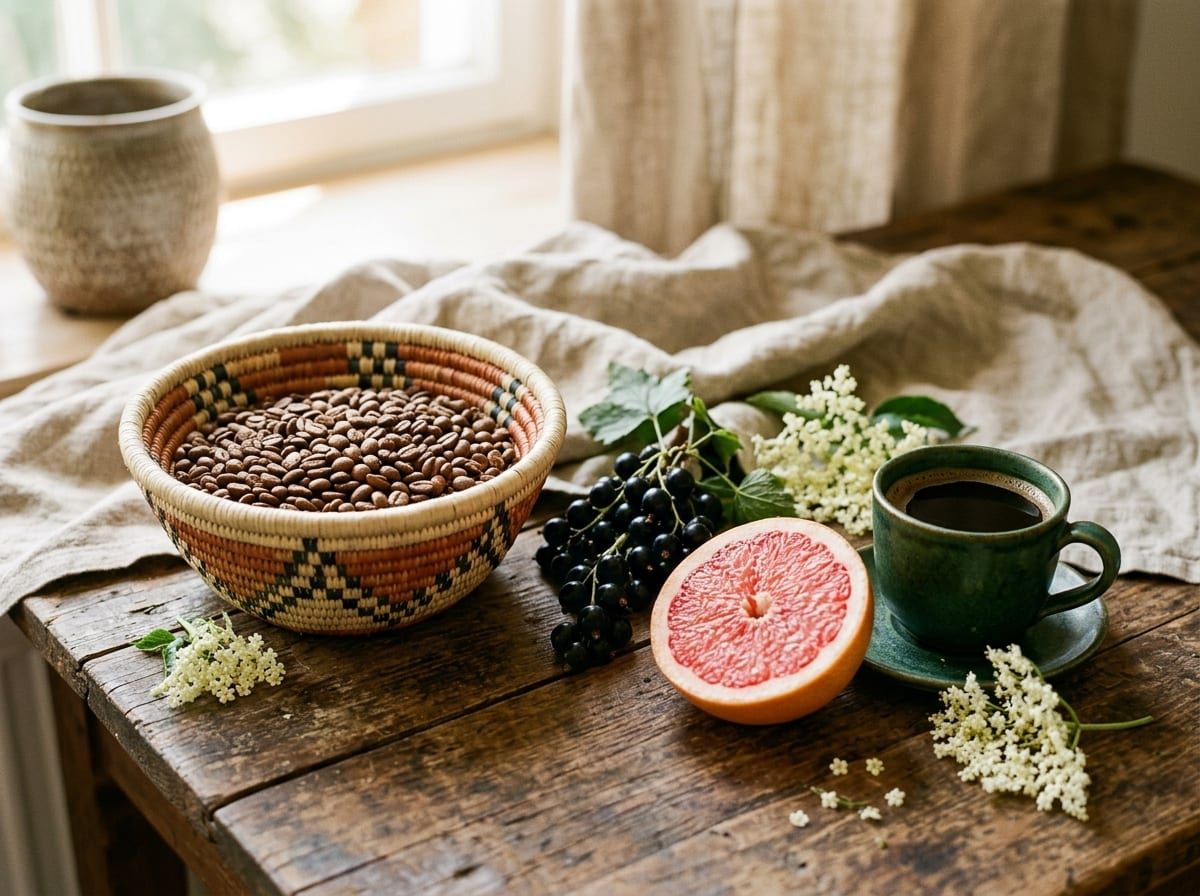
Where does the African character in the cup come from?
Three factors build this profile. Altitude: farms in Ethiopia or Kenya sit at 1700-2300 m, where cool nights slow ripening and concentrate sugars and acids in the bean. Genetics: local varieties - wild heirlooms, SL28, Bourbon - have a naturally fruity-floral potential. Processing: most of these coffees are washed, which gives a clean, transparent taste; naturals add a layer of jammy sweetness. The result in the cup: jasmine, bergamot, citrus, blackcurrant - aromas you will not find in any supermarket coffee.
Ethiopia - the birthplace and the classic
Ethiopia is the place all arabica comes from, and the only country where coffee still grows wild. Its coffees, built on thousands of local heirloom varieties, are famous for their floral-citrusy, tea-like profile. Three region names worth remembering: Yirgacheffe (jasmine, lime, tea-like elegance), Sidama (fuller, peachy) and Guji (intense, tropical). A washed Ethiopia costs 40-60 zł per 250 g in Polish roasteries; naturals, bursting with strawberry and blueberry, cost about the same. They show best in V60 and Chemex.
Kenya - intense fruitiness
Kenya is the benchmark for juicy, wine-like acidity. The SL28 and SL34 varieties, selected in the 1930s, combined with a double-fermentation method (the Kenyan washed process), give coffees that explode with blackcurrant, grapefruit and tomato umami. The most prized harvests come from the counties of Nyeri and Kirinyaga at the foot of Mount Kenya, and the AA or AB markings on the bag describe bean size, not quality. Kenyas can be pricier than Ethiopias (50-80 zł per 250 g) - the auction sales system and huge demand do their bit. Brew as pour-over; these are coffees that reward precision.
Rwanda and Burundi - the elegance of Bourbon
Rwanda and Burundi built their coffee sectors around the Bourbon variety and a network of community washing stations. The result is clean, sweet coffees with notes of red fruit, tea and honey - the African character without Kenya's overwhelming intensity. They perform brilliantly both as pour-over and in the AeroPress. Prices start at around 40-55 zł per 250 g. These are also good "second step" origins: after Ethiopia, they show how the same continent can sound completely different.
Further directions: Tanzania and Uganda
Tanzania is famous for peaberry beans (single, round seeds inside the cherry) and a profile close to a gentler Kenya. Uganda, historically a robusta country, is moving ever more boldly into specialty arabica from the slopes of Mount Elgon and into fine robusta - a curiosity for those seeking a heavy, chocolatey body. Both directions can be cheaper than Kenya with surprising quality.
Processing stations: why the same village tastes different
In Ethiopia, Rwanda or Burundi a typical farmer grows coffee on a garden-sized plot and takes the fresh cherries to a community washing station. It is the station that decides half of the flavour: it sorts the cherries, runs the fermentation and dries the beans on raised African drying beds. That is why, next to the region, you will find the station name on the bag - Chelelektu, Duromina, Gitega Hills - and why two coffees from the same area can sound completely different. Washed processing (fermenting and washing off the mucilage before drying) gives a clean, tea-like cup; natural processing (drying whole cherries in the sun for 2-4 weeks) adds jammy sweetness and notes of ripe fruit. If a coffee from a particular station tastes good to you, remember its name - roasters return to good stations every season.
Label markings: G1, AA and company
African coffees carry national classification systems worth learning to decode. Ethiopia grades lot cleanliness on a scale of Grade 1-5: G1 has the fewest defects, and in specialty you buy G1 and G2. Kenya sorts beans by screen: AA are the largest beans (screen 17-18), AB are medium, and PB (peaberry) are single, round seeds; size does not guarantee quality, but AA from a good station is the classic choice. Rwanda and Burundi mostly work with station and lot names. Always look for the growing altitude too (1700 m and up is a good sign) and the roast date - the country name alone tells you the least.
Comparison: which origin is for you
| Country | Profile | Varieties | Price per 250 g | Who it is for |
|---|---|---|---|---|
| Ethiopia | jasmine, citrus, tea | heirloom | 40-60 zł | starting the African journey |
| Kenya | blackcurrant, grapefruit | SL28, SL34, Batian | 50-80 zł | fans of bold acidity |
| Rwanda | red fruit, honey, tea | Bourbon | 40-55 zł | elegance without extremes |
| Burundi | cherry, orange, sweetness | Bourbon, Jackson | 40-55 zł | hunters of underrated coffees |
| Tanzania | fruit, mild wine-like body | Bourbon, Kent, peaberry | 35-55 zł | the gentler sister of Kenya |
How to buy and brew African coffees
Check the roast date (ideally 1-8 weeks back) and the name of the region or washing station on the label - the more precise, the better. African coffees are a staple of the range in Polish roasteries: you will find them at HAYB, JAVA Coffee, Coffee Plant or Hard Beans all year round, because the harvests in Ethiopia (October-January) and Kenya (main harvest October-December) complement the deliveries from Rwanda and Burundi (April-August).
Where do the price differences between origins come from? Kenya sells most of its coffee through weekly auctions in Nairobi, where the best AA lots are bid on by buyers from all over the world - hence its premium. Ethiopia has an enormous supply and thousands of smallholders, so a great G1 can cost as much as an average Kenya. On top of that comes lot scale: microlots from a single station (a dozen or so bags) are pricier than regional blends, but it is exactly in them that the African character sounds cleanest. Do not overpay at the start - a regional Ethiopia for 45 zł will teach you more than a microlot for 90 zł, because it leaves budget for comparisons.
When brewing, spotlight rather than mute: pour-over methods, light roasts, water at 93-96 °C (light-roasted, dense beans from high altitudes like a higher temperature), a 1:16-1:17 ratio to underline the clarity. Leave freshly roasted coffee to degas for 7-10 days - African light roasts need it longer than dark ones. You will find the full list of origins in the regions section, and method selection in the brewing methods guide.
Frequently asked questions
- Why are African coffees so acidic?
- That is fruit acidity, not a flaw. High-altitude farms (1700-2300 m) slow down cherry ripening, so the bean builds up more organic acids and sugars. Add varieties (heirloom, SL28) and washed processing that spotlight this juiciness. If acidity tires you out, choose an Ethiopian natural or a lower brewing temperature.
- Washed or natural for the first time?
- Washed - it is cleaner, more tea-like and shows the character of the region without a fermentation overlay. An Ethiopian natural can be intensely strawberry and jammy, which either delights or overwhelms. A good plan: start with a washed Yirgacheffe, then a natural from the same region for comparison.
- What is the potato defect in Rwandan coffees?
- A single-bean defect found in the Great Lakes region (Rwanda, Burundi), caused by bacteria carried by antestia bugs. Brewed coffee with such a bean smells of raw potato. It shows up rarely (the odd cup), is not harmful, and good processing stations keep it firmly in check.
- Are African coffees suitable for espresso?
- Yes, but choose deliberately. A light-roasted Ethiopia or Kenya gives an intensely fruity, acidic espresso - surprising for many people. Look for coffees the roaster labels as an espresso roast; in milk, Ethiopia's fruitiness can turn beautifully into notes of berry yoghurt.
- Which African coffee to start the journey with?
- A washed Ethiopia from Yirgacheffe or Sidama - floral, citrusy, tea-like, and widely available (40-60 zł per 250 g). It is the gentlest entry into the African profile. Kenya is more intense and tastes best once you already know that juicy acidity is your direction.